Put these four tickers on one watchlist and they can look like variations of the same bet. Look past the price chart and they split apart. MarsCoin offers a path to a separate reward token. PONS points to fees from a launchpad. USELESS makes the absence of utility its premise. CASHCAT carries an old Robinhood name without Robinhood backing. The mistake is to value all four as if the same kind of promise sits behind them.
The useful question is what would have to be true for each story to matter to a holder? This guide fixes each token's identity by chain and full contract or mint address, traces the relevant claim to a primary source, and names the evidence still missing. It does not rank tokens or predict returns. Sources were checked on 5 October 2026; prices, liquidity, holder balances, fees and program rules can change.
| Token discussed here | Story that attracts attention | What the source establishes | Evidence still needed |
|---|---|---|---|
| MarsCoin (BNB Smart Chain) | A Mars meme with SPCXB rewards | The project describes a trading tax; Binance published a conditional reward program | Realized rewards, costs and the separate token's rights |
| PONS (Robinhood Chain) | Launchpad activity could support the token | V1 documents a manual PONS buyback and burn; v2 describes a different, optional buyback for launched tokens | Actual PONS purchases and burns, with their funding source |
| USELESS (Solana) | The lack of utility is the joke | Its white paper disclaims intrinsic utility, ownership and profit sharing | The exact mint, holder concentration and tradable liquidity |
| CASHCAT (Robinhood Chain) | A familiar name and a fee-funded burn claim | A Robinhood-hosted statement says there is no affiliation; LetsCash describes a fee route to CASHCAT buybacks | Completed buybacks, current wallet concentration and usable liquidity |
- Story that attracts attention
- A Mars meme with SPCXB rewards
- What the source establishes
- The project describes a trading tax; Binance published a conditional reward program
- Evidence still needed
- Realized rewards, costs and the separate token's rights
- Story that attracts attention
- Launchpad activity could support the token
- What the source establishes
- V1 documents a manual PONS buyback and burn; v2 describes a different, optional buyback for launched tokens
- Evidence still needed
- Actual PONS purchases and burns, with their funding source
- Story that attracts attention
- The lack of utility is the joke
- What the source establishes
- Its white paper disclaims intrinsic utility, ownership and profit sharing
- Evidence still needed
- The exact mint, holder concentration and tradable liquidity
- Story that attracts attention
- A familiar name and a fee-funded burn claim
- What the source establishes
- A Robinhood-hosted statement says there is no affiliation; LetsCash describes a fee route to CASHCAT buybacks
- Evidence still needed
- Completed buybacks, current wallet concentration and usable liquidity
Project and exchange claims are attributed. No independent contract audit or live market measurement was performed.
The table is a map of claims and checks, not a contract audit or a current market snapshot. Each address appears in its section below.
MarsCoin: a reward is not a share
The MarsCoin in this article is the BNB Smart Chain token at 0xFe189E97832DA1573e4e4Ff034F4fFC3a15c7777. Binance's listing notice identifies that contract and describes MARSCOIN as a meme token; Binance opened spot pairs on 4 September 2026 and applied its Seed Tag for higher-risk listings.
The project site calls MarsCoin a “stock coin,” says it trades against SPCXB on Flap, and says a 3% tax on buys and sells helps fund SPCXB rewards. That tax is a cost a buyer and seller should account for, while the reward amount and timing are separate questions. Binance also announced a separate SPCXB airdrop program for eligible MARSCOIN holdings on its platform, subject to account, amount, timing and regional conditions. Its announcement establishes the program's stated terms, not what any particular holder will receive now or later.
MarsCoin itself is not a share of SpaceX. Binance Academy's explanation distinguishes the meme token from company ownership and voting rights. Even if a holder receives SPCXB, the next questions concern that separate token's legal and economic rights, valuation and market access. The project's “1:1” language concerns SPCXB's relationship to SPCX; it is no promise that one MARSCOIN can be redeemed for a share or a fixed amount of money.
The test: verify the current reward rules, the tax on the exact trading route and the rights attached to SPCXB. Keep a reward-token claim separate from an equity claim. There is also an older, unrelated Marscoin (MARS) proof-of-work network with a January 2014 genesis block. Its similar name does not connect it to this BNB token.
PONS: which buyback is actually for PONS?
The PONS discussed here is the Robinhood Chain token at 0x39dBED3a2bd333467115dE45665cC57F813C4571. Pons's documentation lists this exact address as its reference token, records its launch through a legacy factory, and describes pons as a place to create and trade tokens directly from a wallet.
The v1 documentation describes a manual program using a portion of protocol fees to buy PONS and send it to a burn address. Its stated allocation is not immutable, and the documentation warns that burning does not guarantee a higher price. Pons also has a v2 launch protocol with a different curve, pool and fee design. V2's optional creator-funded buyback purchases the individual launched token, with bought tokens vested rather than burned. That v2 mechanism should not be casually counted as a PONS buyback.
The test: start with a fee, follow the transfer into a PONS purchase and verify the burn address and transaction. Then ask how consistently this happens. Neither platform activity nor a burn is a dividend paid to each holder. The project's risk notice says launched tokens may be volatile or illiquid, and that names and symbols can be copied. A launchpad's growth is a subject for research, not a valuation formula for PONS.
USELESS: when the joke is the product
The USELESS COIN here is the Solana token with mint address Dz9mQ9NzkBcCsuGPFJ3r1bS4wgqKMHBPiVuniW8Mbonk, which appears on the project's token page and Solscan's token page. The project's white paper presents it as a community meme with no intrinsic utility, roadmap, ownership claim or profit-sharing right. Those are project disclosures, not a forecast that the token must be worthless or valuable.
The name needs extra care. A separate project at uselesstoken.net claims a USELESS lineage beginning in 2021 and publishes different BNB and Solana addresses. Fenton has not adjudicated that project's branding claims. The practical point is narrower: “USELESS on Solana” alone does not identify a unique mint. Match the full address before relying on a market page or social post.
The test: confirm the full mint on the trade screen, then look at holders and the liquidity available for the intended trade size. Without cash flows or a promised product, the case for this particular USELESS token largely depends on attention and a market willing to trade it. The absence of a utility claim is part of the premise; it does not remove concentration, trading depth, custody or sentiment risk.
CASHCAT: a familiar name, no Robinhood backing
The CASHCAT here is on Robinhood Chain at 0x020bfc650a365f8bb26819deaabf3e21291018b4. Both the project's site and a crypto-asset statement hosted by Robinhood and compiled by Coinsquare identify the address. The statement says the token's name draws on an old internal working name associated with Robinhood, but that Robinhood has no affiliation with its developer and that owning CASHCAT confers no claim to Robinhood equity or products.
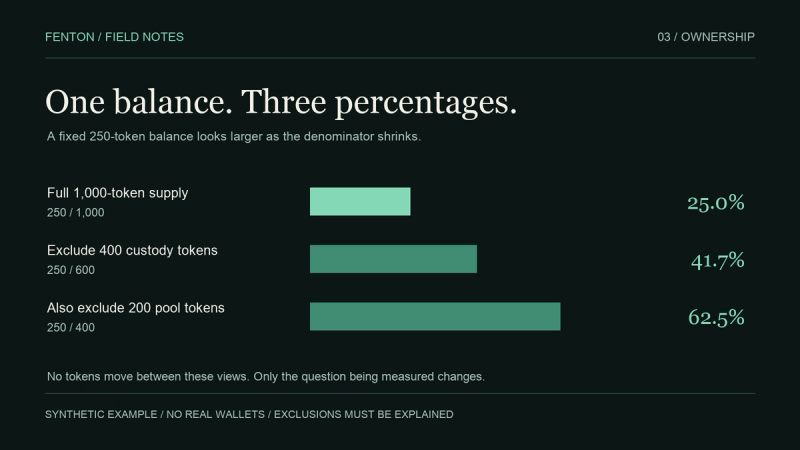
The same statement also warns about counterfeit contracts and concentration among some early addresses. It describes the contract and liquidity pool as deployed on 18 June 2026, before the chain's public mainnet debut. The timing and concentration matter because an early wallet may hold inventory large relative to tradable liquidity. A holder list cannot tell us what that wallet intends to do, and market capitalization cannot tell us the price available for a large sale.
The CASHCAT site now points to a separate token launchpad, letscash.fun, which says part of platform fees is intended to buy and burn CASHCAT. Its public dashboard reported degraded Robinhood Chain nodes and unavailable buyback figures when checked on 5 October. That prevented this review from confirming completed buybacks from the dashboard. The test: find fee-routing, purchase and burn transactions, and compare the size of early-wallet balances with available trading depth. Until those checks are done, a proposed fee mechanism is a claim, not a measured support for price. Deployment on Robinhood Chain does not make CASHCAT a Robinhood-endorsed investment.
The four mistakes a ticker list invites
1. Mistaking a name for an identity. Record the chain, full address and source used to verify it. Search results and tickers can point to different contracts. MarsCoin and USELESS have visible name collisions in the source record.
2. Mistaking a mechanism for a holder right. A reward program can have thresholds and exclusions. A buyback can be discretionary. A familiar brand name can convey no rights at all. Ask what a holder is legally or technically entitled to receive, and which document or transaction supports the answer.
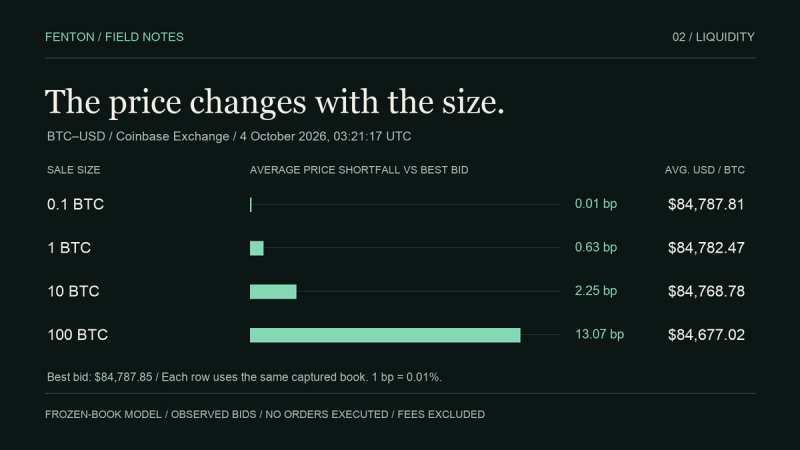
3. Mistaking a quote for an exit. A quoted price or market capitalization is not the amount a seller can realize. Examine the pool or order book, paired asset, fees and price impact for a stated trade size at a stated time. This article does not provide a live execution estimate.
4. Mistaking a wallet balance for a motive. Inspect large addresses, known pools, lockups and documented controls, while leaving unknown wallet identities unknown. Concentration can matter; a balance is not proof of a planned sale.
Each check needs a date. Fees, rewards, buybacks, liquidity and venue access can change. A screenshot without a date, contract and market is weak evidence for a current decision.
The most revealing comparison is the distance between a token's story and a right or transaction a holder can verify. On the evidence reviewed here, that distance differs across all four.